
Find People in Cudahy
Cudahy people search work is county-driven because the main name records are not kept by a city search box. The City Clerk can help with local records, agendas, notices, and staff contacts, but deeds, marriage records, voter records, vital records, and many business filings run through the Los Angeles County Registrar-Recorder/County Clerk or state offices. Start with the strongest clue you already have. A full name points toward court, business, license, and recorder records. A street address points first to the assessor and then to recorded documents, tax records, and old reverse directories.
The safest method is to compare several official sources before treating a match as the same person. Cudahy has many multi-unit addresses, and 90201 can appear in nearby Bell-area contexts. Names can shift through marriage, accents, compound surnames, initials, and older directory spelling. One record may show an owner, another a resident, and a third a business agent.
- Check the Los Angeles County Assessor Portal when the clue is an address or Assessor Identification Number.
- Use LA Superior Court Online Services for civil, family, probate, small claims, and criminal party-name searching.
- Use the RR/CC real estate copy and viewing routes when a deed, lien, or recorded document may connect the name to property.
- Use state business, professional license, custody, and unclaimed-property tools when the person may appear outside city records.
- For older residents, widen the search to LAPL city and street directories, LA County Library genealogy tools, and State Archives county records.
Cudahy Records Offices for Search
The main Cudahy records trail runs through a short list of custodians. The Los Angeles County RR/CC is the key office for recorded real estate documents, vital records, marriage records, fictitious business names, voter records, and election files. The Assessor connects addresses and AINs to parcel details. LA Superior Court holds case records. The Cudahy City Clerk handles municipal public records, council materials, notices, and city records requests. For a deeper access-law breakdown, use the Cudahy public records page.
City records are narrower than county records, but they can still place a person in a local civic trail. The Cudahy public records hub points to agendas, salary material, municipal code pages, public notices, and Public Records Act request access. Building, planning, zoning clearance, home occupation, and complaint records can also matter when an address, business use, or neighborhood issue is part of the search. Those city records are usually request-driven rather than a people-name database.
LA County Assessor
County parcel and assessment records
Los Angeles County, CA
AIN or address search
Cudahy Deed Index Limits
The biggest Cudahy people search trap is assuming Los Angeles County deeds are a normal online name index. The RR/CC states that real estate records are maintained since 1850/1851, but the public internet does not expose the real estate index. Official viewing is by appointment at Norwalk, where alphabetical name and year indexes are available. Online copy orders are possible, yet the requester still needs enough detail to identify the document or pay for a search.
The RR/CC real estate viewing page shows the appointment-centered route for record viewing. The screenshot below is useful because it confirms that the index path is not a free web search.
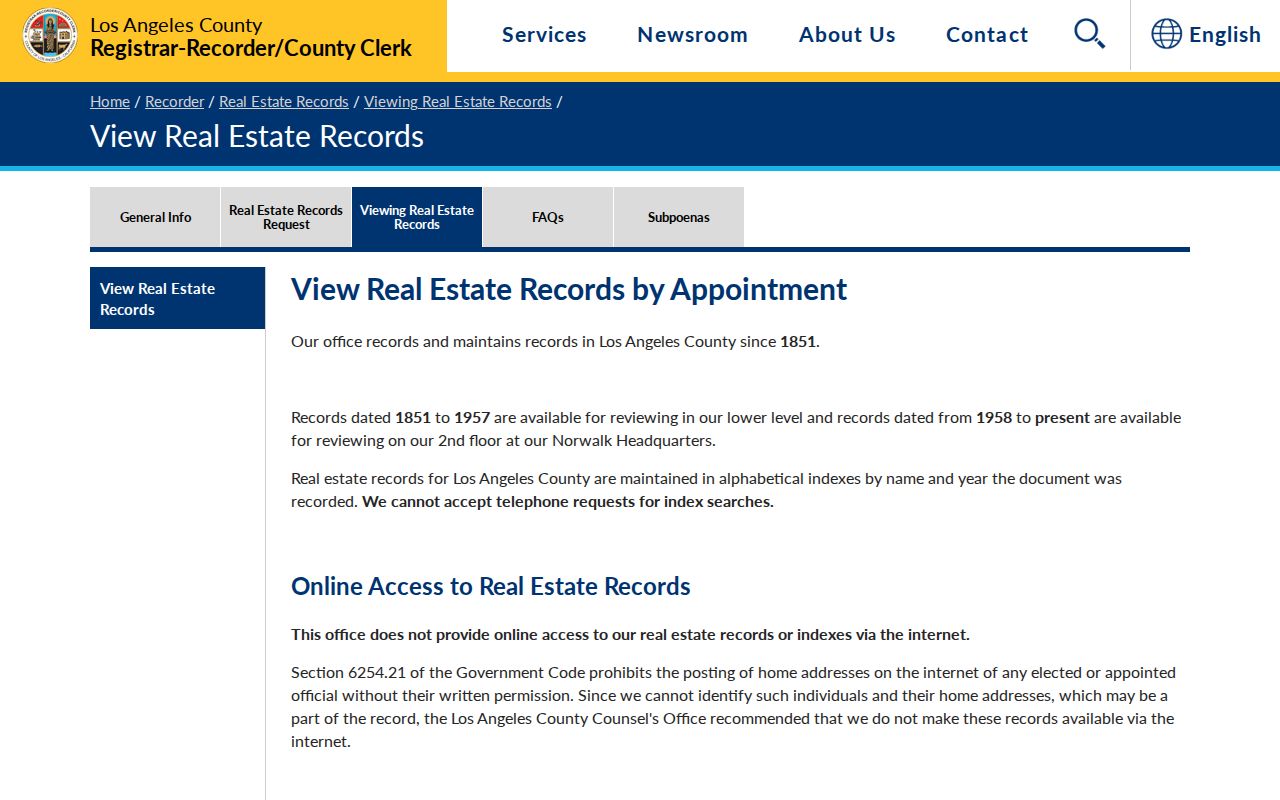
Use the offline index fact to plan the order of work: address to assessor, assessor to AIN, AIN or name to recorded documents, and then copy requests when the record can be identified.
| Recorder clue | How it helps | Access route |
|---|---|---|
| Grantor or grantee name | Connects a person to a deed, lien, release, or other recorded instrument | Norwalk name/year index or copy search |
| Recorded year | Limits the search and search fee | Required or strongly requested on mail/fax searches |
| Document title | Distinguishes deeds, deeds of trust, releases, liens, and related documents | Used on copy request forms |
Cudahy Address Search Clues
The Los Angeles County Assessor Portal is the best online entry point when the known fact is a Cudahy address. It searches by AIN or address, not as a broad owner-name lookup. The official parcel data dictionary lists fields such as situs ZIP, tax-rate area, AIN, property location, use type, building count, year built, square footage, recording date, values, exemptions, parcel class, boundary, and legal description. Those details help separate a property owner from a resident, which matters in a dense city with many apartments.
The assessor screenshot in the manifest comes from the official portal. The portal is most useful when paired with the Assessor Map Search and, when tax context is needed, the Los Angeles County Property Tax Portal.
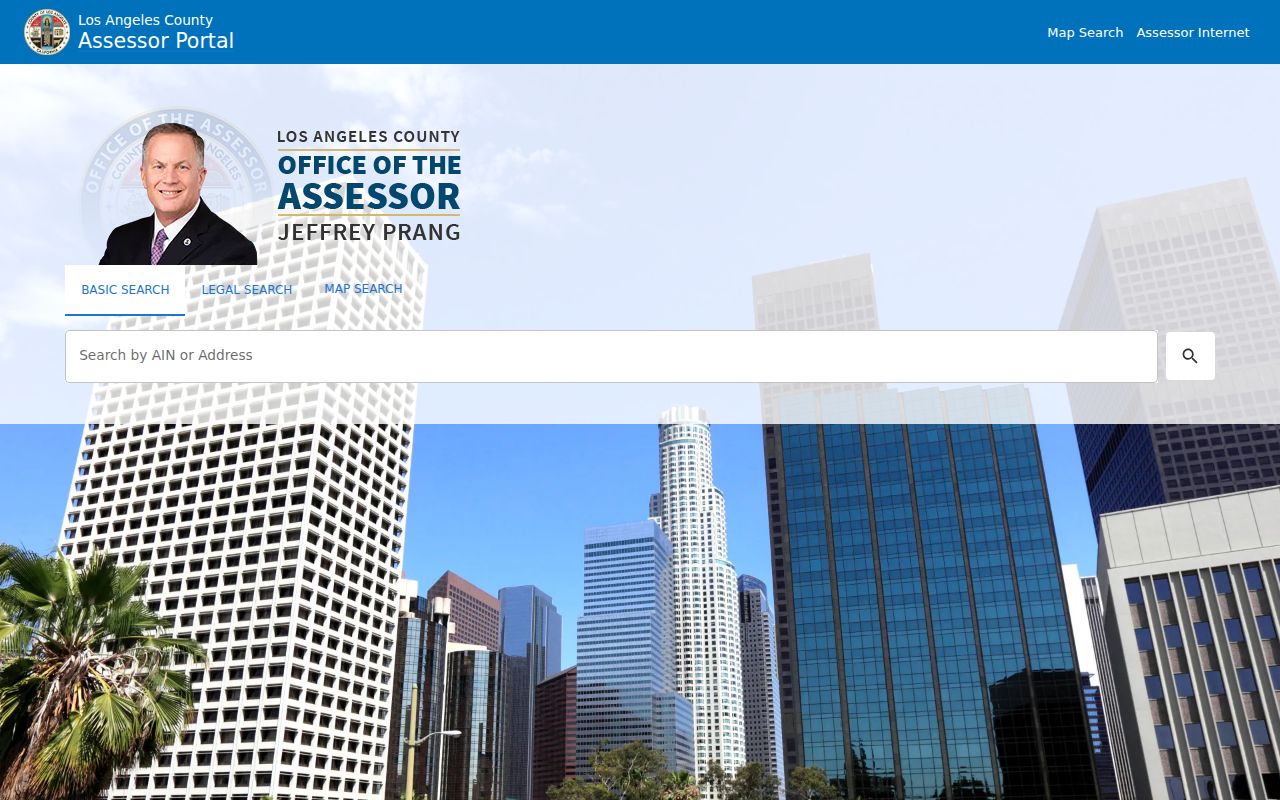
A parcel hit can show the physical property location and assessment context, but it should not be treated as a list of current occupants. Recorded documents, tax tools, court files, and directories fill different parts of the address story.
Cudahy Court Records Lookup
Cudahy is served by the Superior Court of California, County of Los Angeles. No separate Cudahy municipal court was located in the research. LA Superior Court Online Services supports party-name and case-number access for available civil, family, probate, small claims, criminal, and traffic records, with coverage that varies by case type. The court FAQ lists family, probate, and unlimited civil name-search index information from 1983 forward, limited civil from 1991, small claims from 1992, felony criminal from 1980, and misdemeanor records from 1988, with some older misdemeanor index material.
The LA Superior Court Online Services page is shown below. The court search is powerful, but it is not free to test without care. Name searches cost $4.75 and are charged before results, so date ranges, case type, and spelling variants matter.
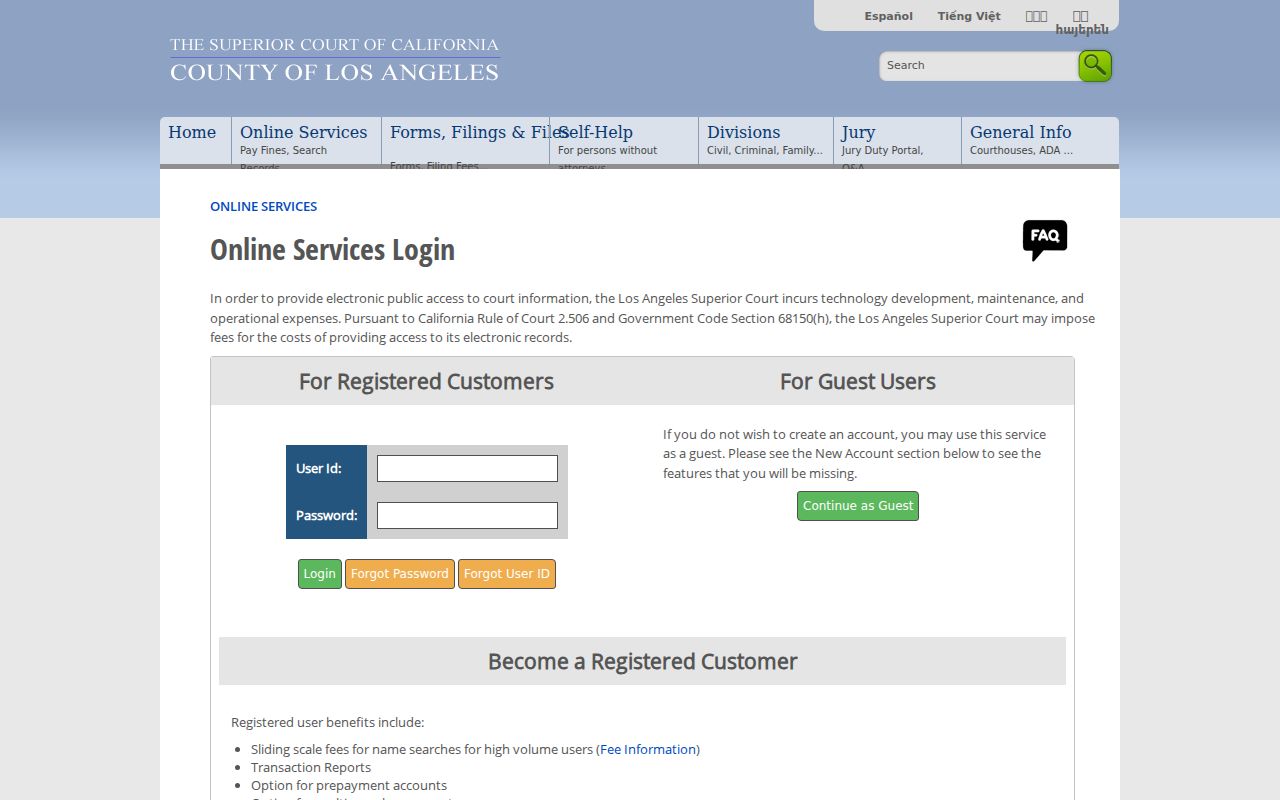
Federal matters for Cudahy and Los Angeles County are handled in the U.S. District Court, Central District of California, Western Division. PACER is the federal search route, while LA Superior Court public access computers and archives remain the fallback for records that are not online.
| Search field | Use | Limit |
|---|---|---|
| Last and first name | Finds available party or defendant index records | Fees apply before results |
| Company name | Finds business-party cases | Not a personal-name substitute |
| Case number | Retrieves known case summaries and images | Images vary by case type and date |
Cudahy Business Name Trails
Business and license records often identify people who do not appear in a city staff list or current directory. The California Secretary of State bizfile Online search retrieves corporations, LLCs, and limited partnerships by entity name or number. Results can include status, formation or registration date, jurisdiction, agent for service of process, addresses, and filing history when available. The same state portal also supports UCC searches by debtor name, secured party, and file number.
The manifest screenshot below shows the SOS business search used for Cudahy people search work. For local operators, pair it with LA County fictitious business name records, Cudahy planning or permit records by request, and board-level license lookups.
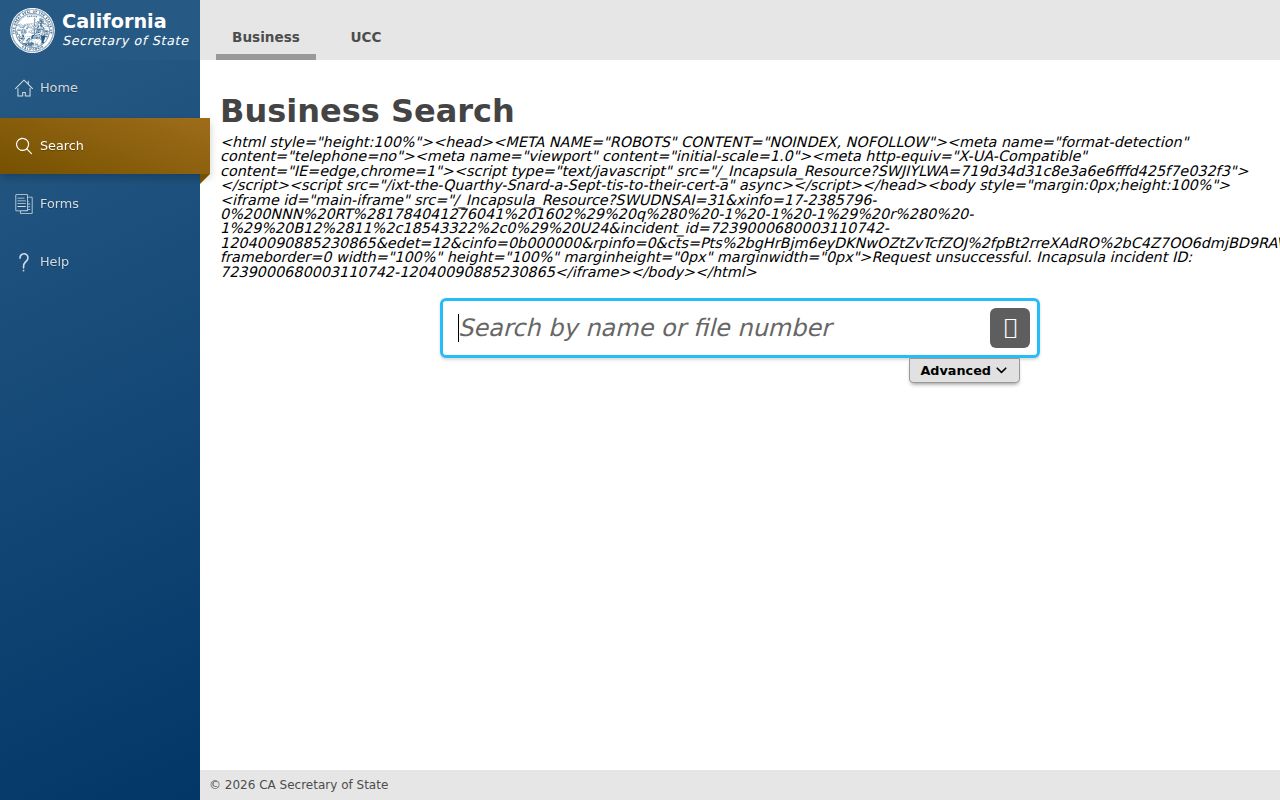
Professional license searches add another route. The California Department of Consumer Affairs advanced search uses first name, last name, license number, business name, registry number, and board or profession filters. State Bar, CSLB, DRE, and educator credential lookups may also identify a person through status, discipline history, business name, or license location.
Cudahy Voter Records Limits
California voter registration is not a public browse-all-people database. Cudahy voters can use the LA County Voter Registration Verification tool or California My Voter Status to check their own registration, address, party preference, vote-by-mail status, polling place or vote center, county elections contact, and related election details. The public voter file is governed by Elections Code sections 2188, 2194, and 18109 and California Code of Regulations sections 19001 through 19013.
The voter page covers the full record set and request rules in detail. The key point for a Cudahy people search is simple: voter tools can confirm status for the voter or support approved file uses, but they are not a casual name directory.
Personal-use limit. Do not use voter records, court records, deeds, or directory data to stalk, harass, threaten, or expose a protected person.
Cudahy Vital Records Sources
Vital records for Cudahy events are split between Los Angeles County RR/CC and the California Department of Public Health. LA County issues county birth, death, and marriage copies. CDPH issues statewide birth, death, marriage, and divorce certificates or records. Divorce decrees, property settlements, and complete divorce case files are court records, not CDPH records.
California distinguishes authorized certified copies from informational certified copies under Health and Safety Code section 103526. Authorized copies require eligibility and sworn statements, while informational copies may be available to people who do not qualify for authorized copies but are marked as informational. Confidential marriage copies are limited to the parties or court-order requesters. Historical indexes are different from certified-copy access and are often found through library and genealogy tools.
- Authorized certified copy
- A vital-record copy issued to a person who meets statutory eligibility and identity rules.
- Informational copy
- A certified copy marked for information only and not valid to establish identity.
- Decree
- The court order in a divorce case; CDPH divorce certificates from 1962 through June 1984 are not decrees.
Cudahy Custody Record Searches
Cudahy law-enforcement services are provided by the Los Angeles County Sheriff's Department East Los Angeles Station. The LASD Inmate Locator is the current county custody search. It uses last name, first name, middle name, and date of birth fields, and custody questions can be directed to the listed LASD custody contact. LASD records and incident reports are separate from court dockets and must be requested through LASD records or Public Records Act channels when disclosable.
The image below shows the official LASD locator route. For state custody, use CDCR CIRIS. For federal custody from 1982 forward, use the Bureau of Prisons inmate locator. The California Megan's Law website is a registry for legally disclosable records only, not a complete criminal-history source.
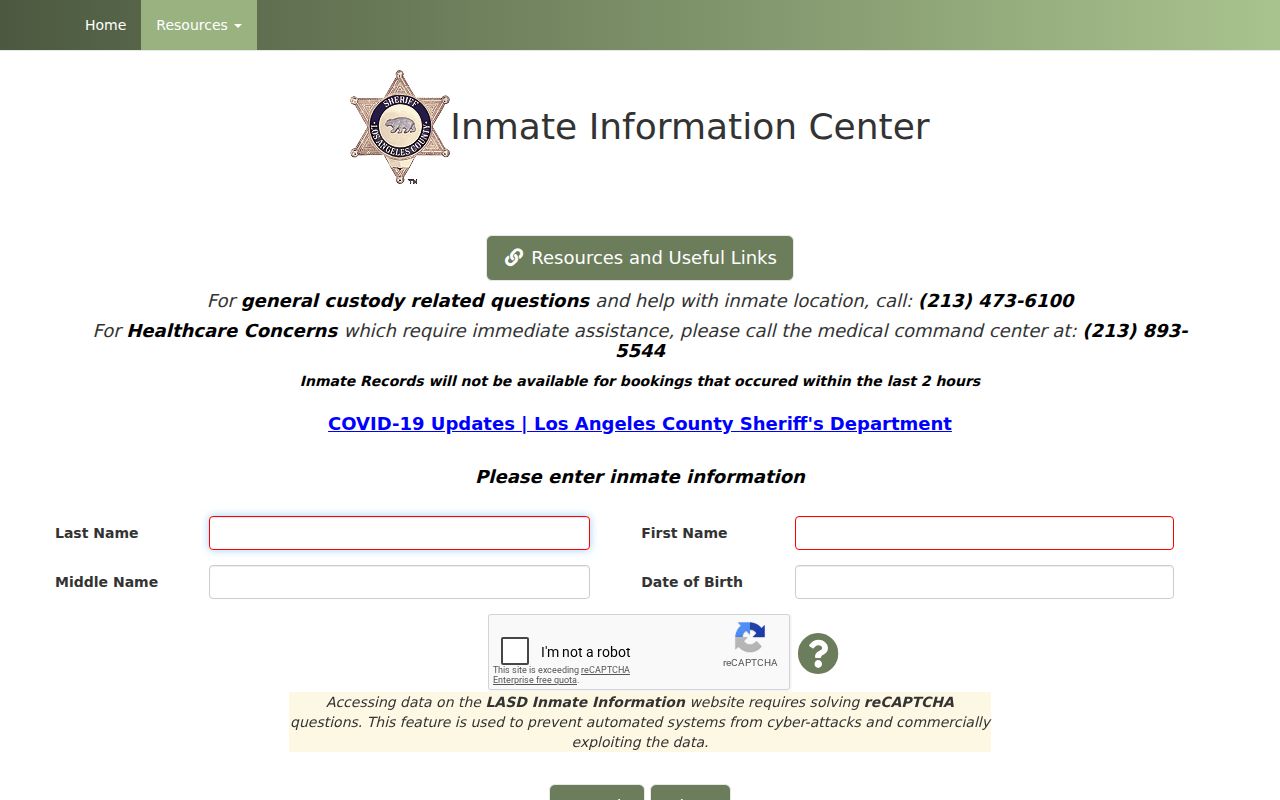
Note: Custody and registry systems answer narrow status questions and should be checked against court records before drawing broader conclusions.
Cudahy 90201 Address Context
Cudahy is about 1.2 square miles in southeast Los Angeles County, with a 2020 population of 22,811 and research-cited density near 19,397 people per square mile. That density changes how a people search should be read. A single parcel can contain many units. An owner may not be an occupant. A voter, student, business agent, and taxpayer at the same address may be different people.
The city is also historically distinctive. Michael Cudahy bought part of Rancho San Antonio in 1908 and resold large, deep lots. Later apartment redevelopment changed the address pattern. For older Cudahy names, compare the year of the record with the address source. Modern assessor data, RR/CC records, and LAPL reverse directories may describe different eras of the same place.
Cudahy Former Resident Search
Former residents are often easier to trace through library collections than through modern portals. The Cudahy Library page says local library service began in 1913 in a private home, operated as Antonio Library by 1914, and moved several times before the current library beside City Hall opened in 1968. That history explains why older records may appear under Antonio, Cudahy, Bell-area, southeast Los Angeles, or broader county headings.
The strongest directory source is the Los Angeles Public Library digitized city and street directories collection, which spans 1875 through 1987 and can be searched by name or address. LA County Library databases add HeritageQuest, the Californiana Collection, 19th-century newspapers, census schedules, and county or city histories. The California State Archives family-history resources include county records, Great Registers, naturalization, probate, deeds, courts, military, licensing, and other older record groups when available.
Cudahy Official Search Choices
Official records and commercial people-finder databases answer different questions. Official systems are slower and more fragmented, but each result has a custodian and an access rule. Commercial data can merge old addresses, broker files, marketing lists, and public records, but the source and freshness may be unclear. For Cudahy, the official route is stronger when a copy, date, agency, or legal status matters.
| Choice | Best use | Cudahy caution |
|---|---|---|
| Official county records | Deeds, court cases, vital copies, taxes, voter rules | Some access is in person, paid, or restricted |
| Library directories | Former residents, old addresses, family history | Search by year and spelling variant |
| Commercial data category | Broad lead generation only | Verify every key fact with a custodian |
Cudahy Privacy and Opt-Outs
California privacy rules affect both official records and broker data. Safe at Home, run by the Secretary of State under Government Code section 6205 et seq., gives qualifying people a substitute mailing address. SOS warns Safe at Home participants not to use ordinary online voter registration because substitute-address confidentiality can be harmed. Court sealing, confidential voter rules, vital-record eligibility, and DMV restrictions also limit what appears in public sources.
The CCPA as amended by CPRA, Civil Code section 1798.100 et seq., gives California residents rights against qualifying businesses, including rights to know, delete, correct, opt out of sale or sharing, and limit sensitive personal information. The California Privacy Protection Agency data-broker materials state that the deletion mechanism becomes more operational in 2026 for registered brokers. Those broker rules do not erase official county court, recorder, voter, or vital records, but they can help reduce reposted commercial copies.